
Late July 2024 marked a new place in the history of Bangladesh, as the young population of the country united together to take down the fifteen-year-standing regime of Hasina. During the uprising and right after the fall of the government, student protestors gathered on the streets of Dhaka, coloring the city with their paint of resistance. As I wandered around the streets right after what it felt like, newfound freedom at the time, I saw young students on the street, drawing their new hope on the walls. These temporary mementos of resistance needed to be captured to live forever, reminding us of the strength of our unity. The Memento series is an attempt to achieve some of the works on the streets of Dhaka.
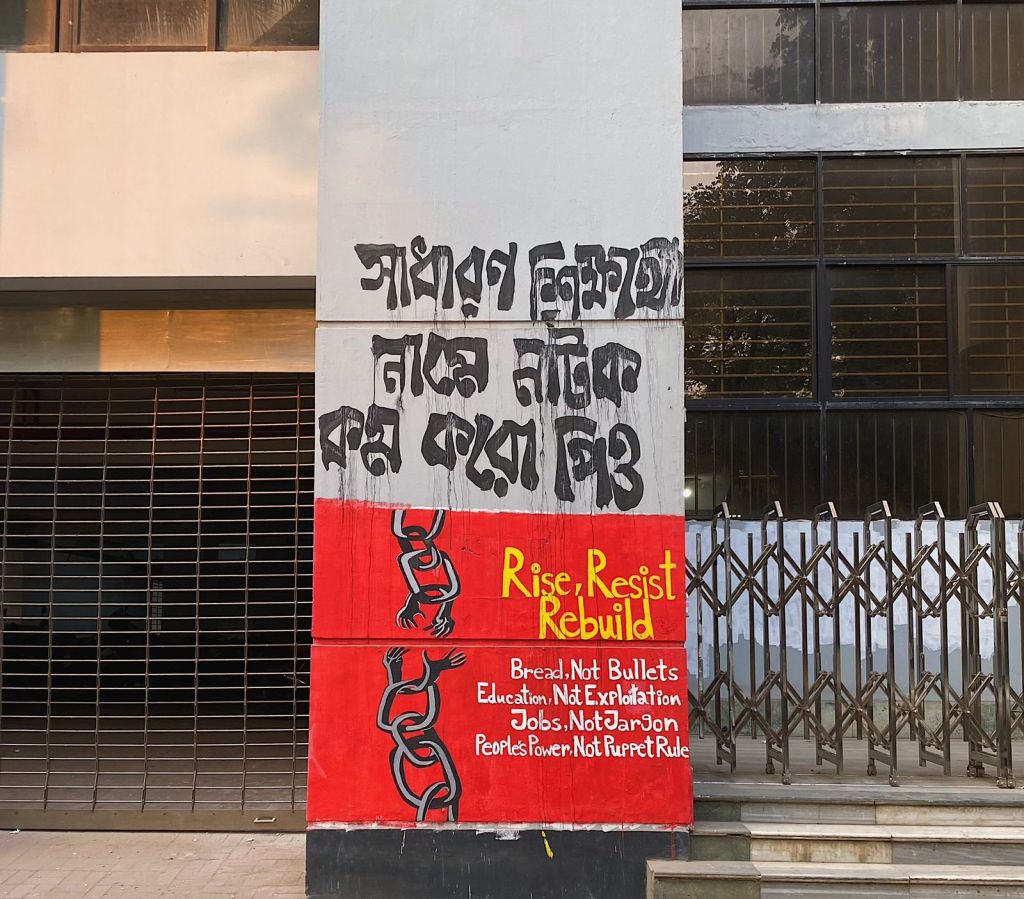
Most of the work holds strong messages, either calling out the oppressive regime or rearticulating the hopes for the future of Bangladesh.
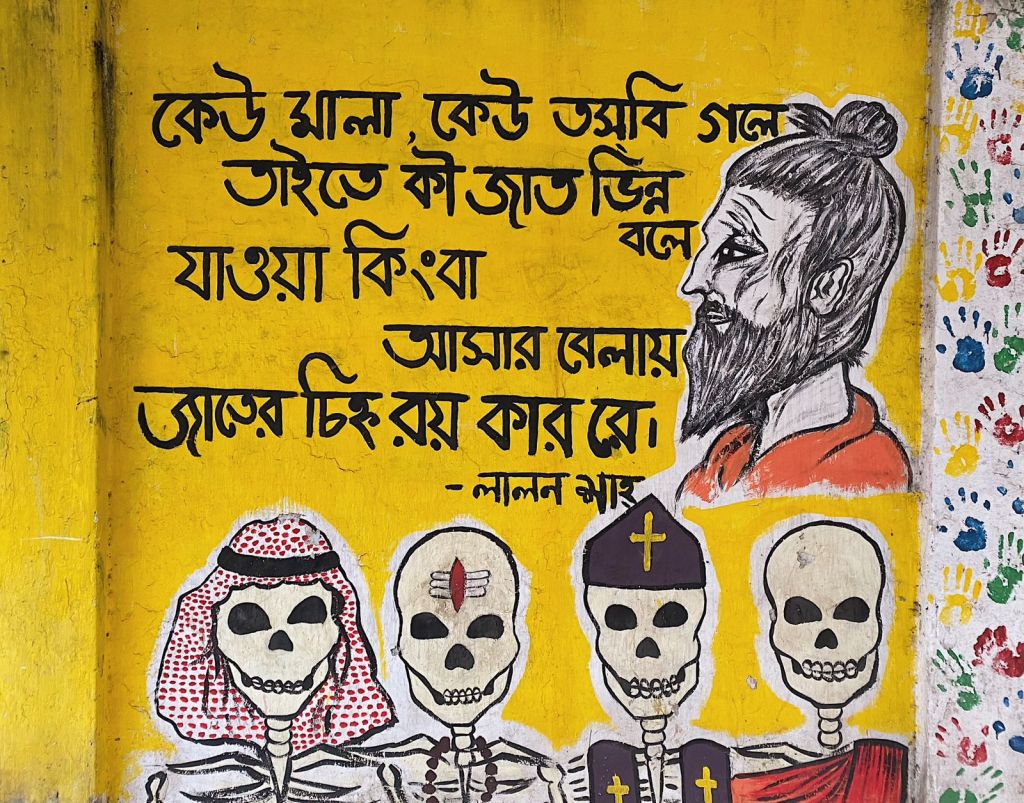
Some of the work centered around preserving the unity of different religions coexisting in the country, like the one shown above, which quotes one of the most famous spiritual philosophers of Bangladesh, Fakir Lalon Shah. The quotation reads, “Some wear mala, some tasbih, but when it is time to go (to the afterlife), are we really distinguishable from one another by these (religious items)?”
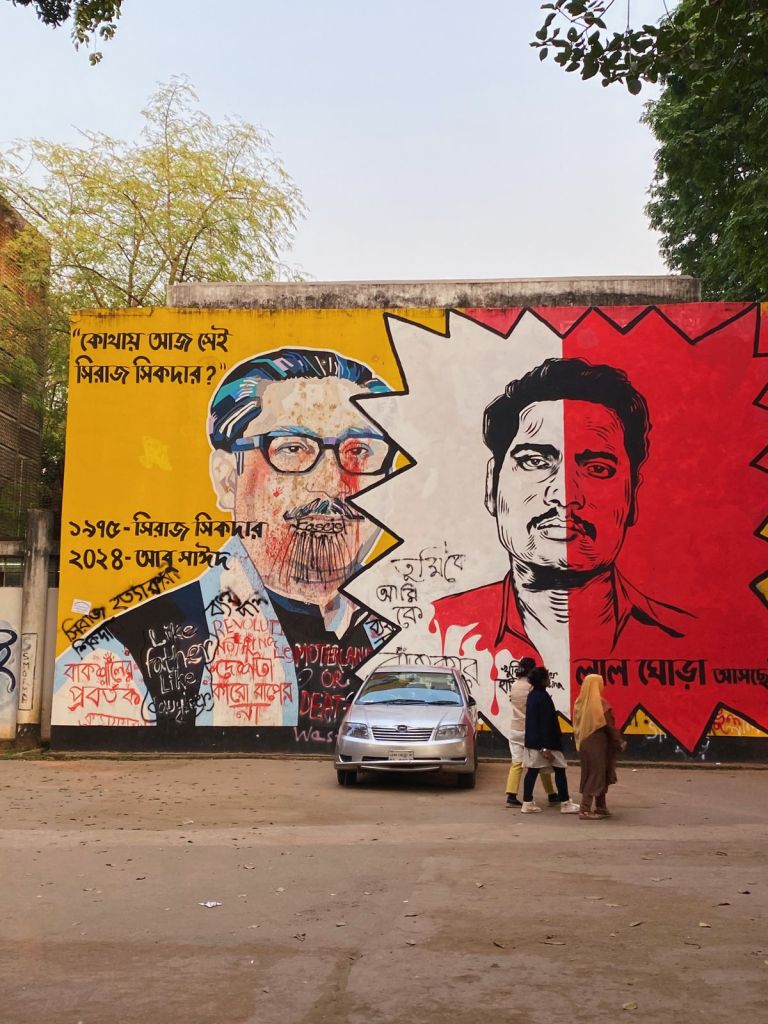
Some work contrasts the past to the present, comparing the struggles and loss of the 1971 liberation war of Bangladesh with the recent uprising, which is considered by many to be the second liberation of Bangladesh.
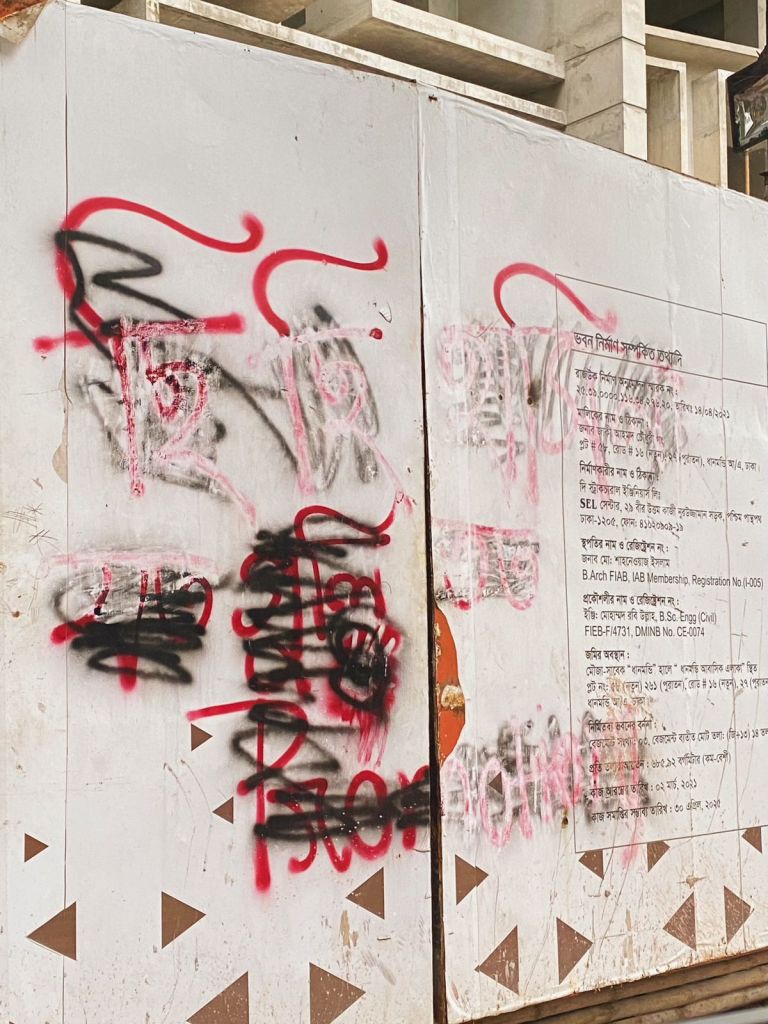
Some of them, like the one above, depict the persistent resistance of the overthrown party. The writing on the wall is one of the famous slogans during the uprising “Chi chi Hasina,” which translates to “shame on Hasina”. This writing can be seen all over the streets of Dhaka. But this particular graffiti seems to have been removed with black and white paint.
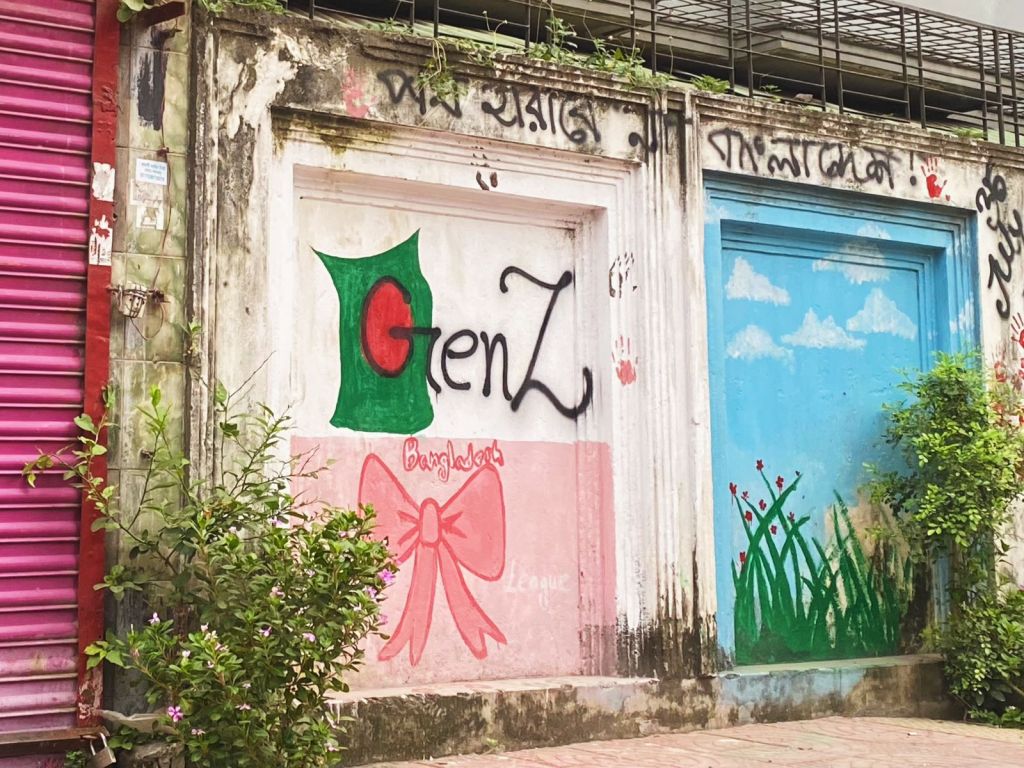
These works might be temporary, but the sentiment they hold and the unity they brought during and after the movement will forever be a memento of the young generation’s struggles and sacrifices for the nation.
 Joyeeta